Ship infrastructure 3-5x faster
with real programming languages
Looking for a robust IaC solution? Stop wrestling with YAML and proprietary DSLs. Use TypeScript, Python, Go, or C# to build, test, and deploy cloud infrastructure the way you write application code.
Trusted by innovative companies






“When we did it with Terraform, it took two weeks to do infrastructure deployments. Now we do it in about three hours a day. So that's how much of an improvement Pulumi gave us on our deployment time.”
Matt Stephenson, Senior Principal Software Engineer, Starburst
Write infrastructure like software
Pulumi Infrastructure as Code Engine
Author infrastructure as code (IaC) using programming languages you know and love – including TypeScript/JavaScript, Python, Go, C#, Java, and YAML. Deploy to 170+ providers like AWS, Azure, Google Cloud, and Kubernetes.
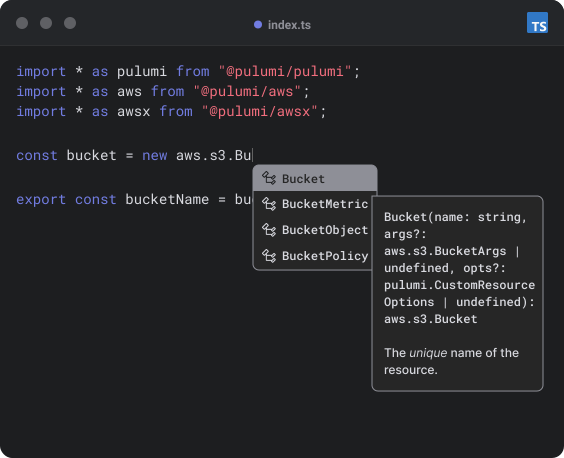
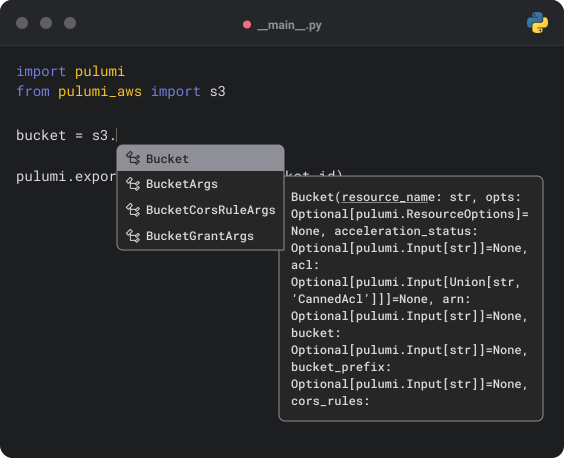
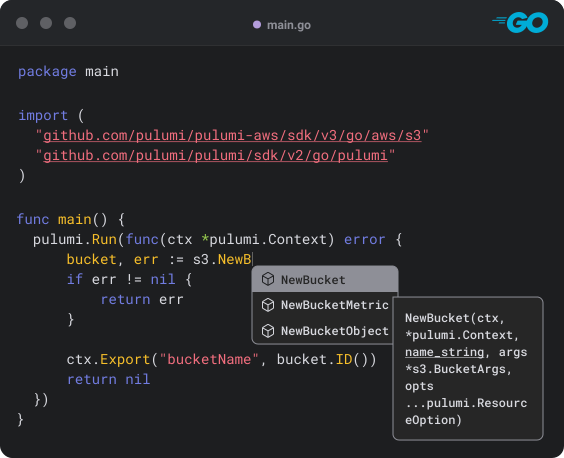
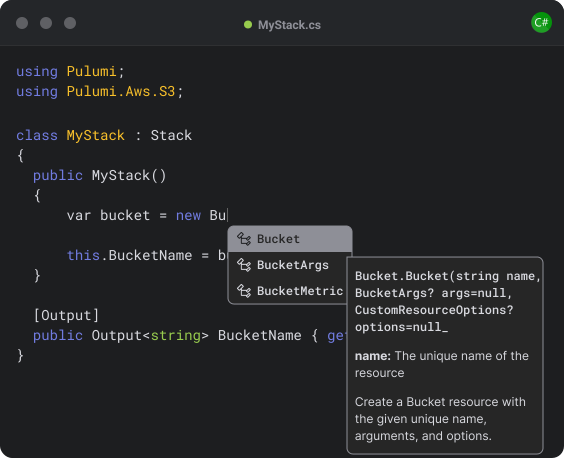
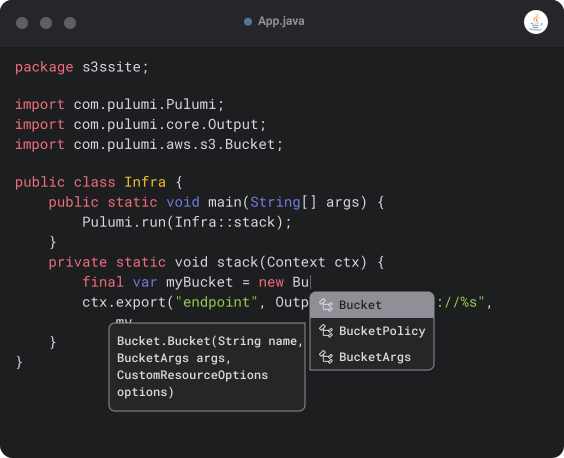
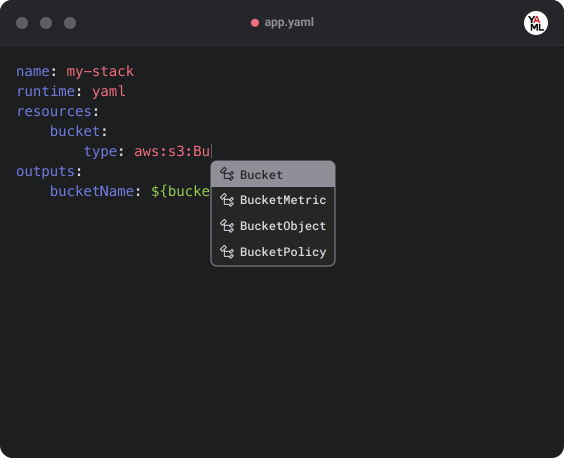
AI-powered infrastructure
Generate Pulumi code from natural language or convert existing Terraform with Neo AI
Deploy to any cloud in minutes
170+ providers including AWS, Azure, GCP, Kubernetes, and every major SaaS platform
Catch errors before deployment
Type-checking, unit tests, and policy validation prevent misconfigurations from reaching production
Build infrastructure faster with reusable components
Pulumi Packages
Build and reuse higher-level abstractions for cloud architectures with multi-language Pulumi Packages. Distribute the packages through repositories or package managers so your team members can reuse them.
import * as eks from "@pulumi/eks";

// Create an EKS cluster with the default configuration.
const cluster = new eks.Cluster("eks-cluster");

// Export the cluster's kubeconfig.
export const kubeconfig = cluster.kubeconfig;
import pulumi
import pulumi_eks as eks

# Create an EKS cluster with the default configuration.
cluster = eks.Cluster("eks-cluster")

# Export the cluster's kubeconfig.
pulumi.export("kubeconfig", cluster.kubeconfig)
package main

import (
  "github.com/pulumi/pulumi-eks/sdk/go/eks"
  "github.com/pulumi/pulumi/sdk/v3/go/pulumi"
)

func main() {
  pulumi.Run(func(ctx *pulumi.Context) error {
    // Create an EKS cluster with default settings.
    cluster, err := eks.NewCluster(ctx, "eks-cluster", nil)
    if err != nil {
      return err
    }

    // Export the cluster's kubeconfig.
    ctx.Export("kubeconfig", cluster.Kubeconfig)
    return nil
  })
}
using System.Collections.Generic;
using Pulumi;
using Pulumi.Eks;

await Deployment.RunAsync(() =>
{
  // Create an EKS cluster with default settings.
  var cluster = new Cluster("eks-cluster");

  // Export the cluster's kubeconfig.
  return new Dictionary<string, object?>
  {
    ["kubeconfig"] = cluster.Kubeconfig
  };
});
import com.pulumi.Context;
import com.pulumi.Pulumi;
import com.pulumi.eks.Cluster;

public class App {
    public static void main(String[] args) {
        Pulumi.run(App::stack);
    }

    private static void stack(Context ctx) {
    final var cluster = new Cluster("eks-cluster");
    ctx.export("kubeconfig", cluster.kubeconfig());
  }
}
resources:
  eks-cluster:
    type: eks:Cluster
outputs:
  kubeconfig: ${cluster.kubeconfig}
Native cloud providers
Full API coverage for AWS, Azure, Google Cloud, and Kubernetes with same-day updates.
Crosswalk for AWS
Adopt well-architected best practices for your infrastructure easily with the Crosswalk library.
Cloud Native support
Use a single workflow to manage both Kubernetes resources and infrastructure.
Deliver infrastructure through software delivery pipelines
CI/CD Integrations
Version, review, test, and deploy infrastructure code through the same tools and processes used for your application code.
Version and review
Manage infrastructure code in Git and approve changes through pull requests.
Shift left
Get rapid feedback on your code with fast unit tests, and run integration tests against ephemeral infrastructure.
Continuous delivery
Integrate your CI/CD provider with Pulumi or use GitOps to manage Kubernetes clusters.
Trusted by thousands
Pulumi’s Infrastructure as Code CLI and SDK is an open-source project that’s supported by an active community. We maintain a public roadmap and welcome feedback and contributions.
350,000+
developers
3,700+
organizations
170+
Cloud and service integrations
Customers innovating with Pulumi Cloud
Snowflake
Built a multi-cloud, Kubernetes-based platform to standardize all deployments