Enable self-service infrastructure
without scaling your platform team
Looking for a platform engineering solution? Build internal developer platforms that let engineers provision infrastructure safely, with policies, guardrails, and full auditability built in.
Trusted by innovative companies






“Pulumi supercharged our infrastructure team by helping us create reusable building blocks that developers can leverage to provision new resources and enforce organizational policies for logging, permissions, resource tagging, and security.”
Igor Shapiro, Principal Engineer, Lemonade
Empower developers with guardrails
Pulumi Infrastructure as Code Engine
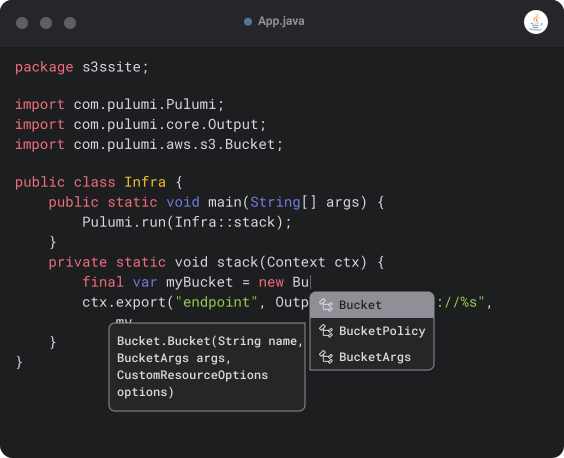
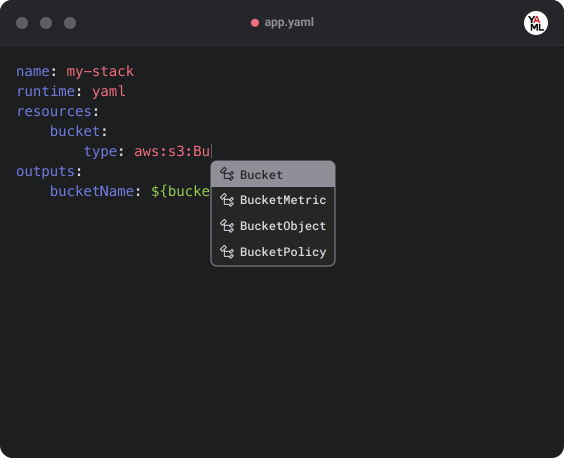
Write policies in TypeScript, Python, or Go to define what teams can provision, then let them self-service within boundaries
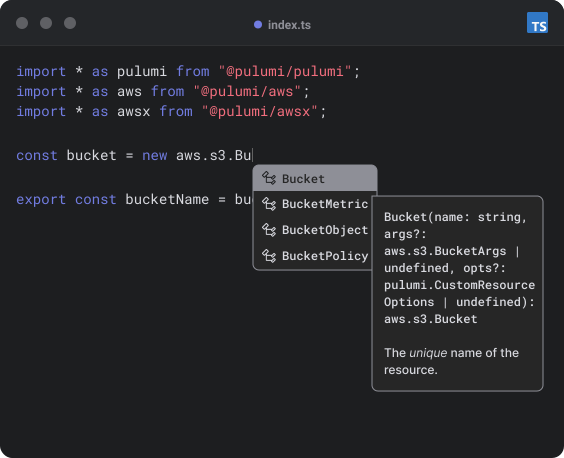
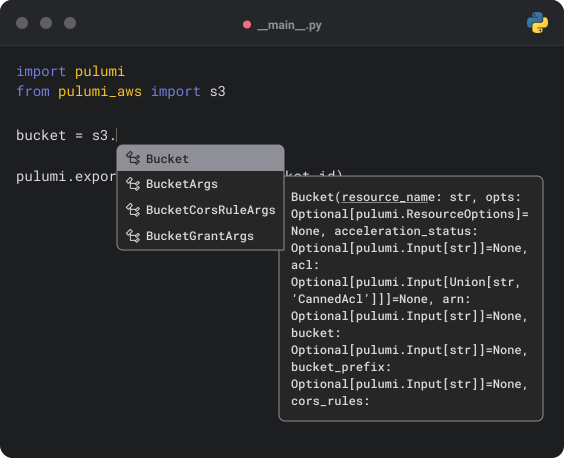
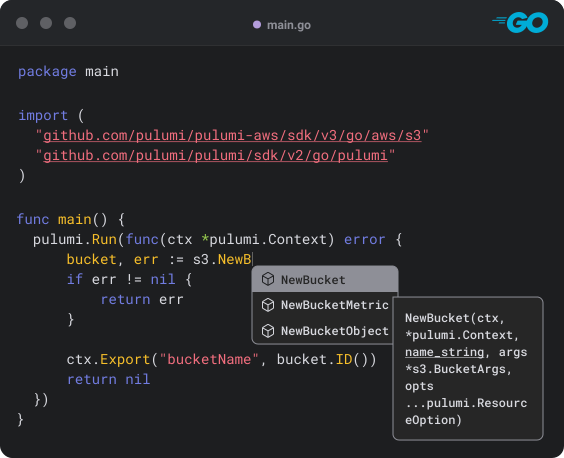
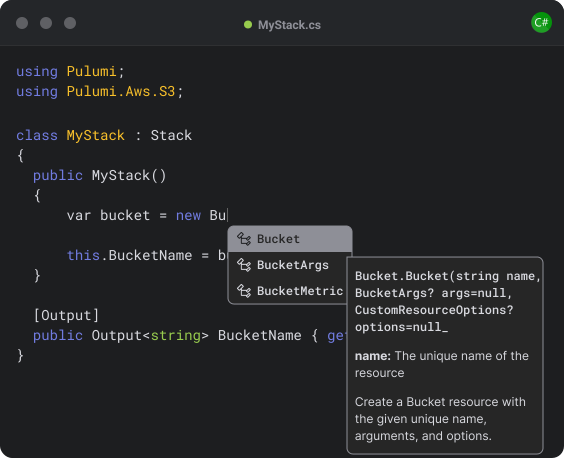
Empower developers with guardrails
Write policies in TypeScript, Python, or Go to define what teams can provision, then let them self-service within boundaries
Prove platform ROI with metrics
Track adoption, cost, and compliance across every stack and environment with centralized visibility
Reduce ticket backlog
Developers get infrastructure on-demand while platform engineers maintain control and governance
Build infrastructure faster with reusable components
Pulumi Packages
Build and reuse higher-level abstractions for cloud architectures with multi-language Pulumi Packages. Distribute the packages through repositories or package managers so your team members can reuse them.
import * as eks from "@pulumi/eks";

// Create an EKS cluster with the default configuration.
const cluster = new eks.Cluster("eks-cluster");

// Export the cluster's kubeconfig.
export const kubeconfig = cluster.kubeconfig;
import pulumi
import pulumi_eks as eks

# Create an EKS cluster with the default configuration.
cluster = eks.Cluster("eks-cluster")

# Export the cluster's kubeconfig.
pulumi.export("kubeconfig", cluster.kubeconfig)
package main

import (
  "github.com/pulumi/pulumi-eks/sdk/go/eks"
  "github.com/pulumi/pulumi/sdk/v3/go/pulumi"
)

func main() {
  pulumi.Run(func(ctx *pulumi.Context) error {
    // Create an EKS cluster with default settings.
    cluster, err := eks.NewCluster(ctx, "eks-cluster", nil)
    if err != nil {
      return err
    }

    // Export the cluster's kubeconfig.
    ctx.Export("kubeconfig", cluster.Kubeconfig)
    return nil
  })
}
using System.Collections.Generic;
using Pulumi;
using Pulumi.Eks;

await Deployment.RunAsync(() =>
{
  // Create an EKS cluster with default settings.
  var cluster = new Cluster("eks-cluster");

  // Export the cluster's kubeconfig.
  return new Dictionary<string, object?>
  {
    ["kubeconfig"] = cluster.Kubeconfig
  };
});
import com.pulumi.Context;
import com.pulumi.Pulumi;
import com.pulumi.eks.Cluster;

public class App {
    public static void main(String[] args) {
        Pulumi.run(App::stack);
    }

    private static void stack(Context ctx) {
    final var cluster = new Cluster("eks-cluster");
    ctx.export("kubeconfig", cluster.kubeconfig());
  }
}
resources:
  eks-cluster:
    type: eks:Cluster
outputs:
  kubeconfig: ${cluster.kubeconfig}
Native cloud providers
Full API coverage for AWS, Azure, Google Cloud, and Kubernetes with same-day updates.
Crosswalk for AWS
Adopt well-architected best practices for your infrastructure easily with the Crosswalk library.
Cloud Native support
Use a single workflow to manage both Kubernetes resources and infrastructure.
Deliver infrastructure through software delivery pipelines
CI/CD Integrations
Version, review, test, and deploy infrastructure code through the same tools and processes used for your application code.
Version and review
Manage infrastructure code in Git and approve changes through pull requests.
Shift left
Get rapid feedback on your code with fast unit tests, and run integration tests against ephemeral infrastructure.
Continuous delivery
Integrate your CI/CD provider with Pulumi or use GitOps to manage Kubernetes clusters.
Trusted by thousands
Pulumi’s Infrastructure as Code CLI and SDK is an open-source project that’s supported by an active community. We maintain a public roadmap and welcome feedback and contributions.
350,000+
developers
3,700+
organizations
170+
Cloud and service integrations
Customers innovating with Pulumi Cloud
Snowflake
Built a multicloud, Kubernetes-based platform to standardize all deployments