

Pulumi logo

Posts Tagged automation

Stop Prompting. Design the Loop.

Stop Prompting. Design the Loop.

For about two years, the unit of work with a coding agent was the prompt. You wrote a good one, you gave it enough context, you read what came back, and you wrote the next one. The agent was a tool, and you were holding it the entire time, one turn after another.

That part is ending. Addy Osmani, a director of AI at Google Cloud, has a name for what replaces it, and I have not stopped thinking about it since: loop engineering. You stop being the person who prompts the agent. You design the loop that prompts it for you.

In my phrasing: you stop being the thing that runs, and start designing the thing that runs. The leverage moves up a layer. What I want to do here is take an honest look at the pieces, and at the part nobody automates.

Read more →

Five Stacks Before Lunch: The Parallel Coding Playbook for Pulumi

Five Stacks Before Lunch: The Parallel Coding Playbook for Pulumi

AI coding has two shapes right now. One agent in a loop, sequential work, you babysitting the chat window. Call that 2x. Most teams live here. Five agents in worktrees, parallel work, fresh-context review on every change. Call that 10x. The trick: 2x is mostly prompting, 10x is mostly plumbing.

The parallel coding playbook is a five-pattern setup for running multiple AI coding agents at the same time without them stepping on each other: an issue used as the spec, a plan/build/validate loop, parallel git worktrees, fresh-session review, and a self-healing layer. The whole thing targets application code. The interesting question, and the one I keep ending up at, is what changes when the five agents are touching infrastructure.

Read more →

The Dark Factory Pattern for Infrastructure: Running Pulumi Lights-Out

The Dark Factory Pattern for Infrastructure: Running Pulumi Lights-Out

The original dark factory was Fanuc’s robotics plant in Oshino, Japan, where the lights are off because nobody is on the floor. Robots build robots. Parts move through the line for weeks at a time without a person walking past them.

The same pattern is now showing up in software. Three engineers at StrongDM shipped roughly 32,000 lines of production code without writing or reviewing any of it. Stripe’s “Minions” agent system merges over a thousand pull requests every week. In January, Dan Shapiro of Glowforge published a five-level autonomy ladder that landed cleanly enough to become the shorthand most people now use, and BCG put out a piece calling it the dark software factory.

Almost every public writeup so far is about application code. The harder question is what this looks like for infrastructure.

Read more →

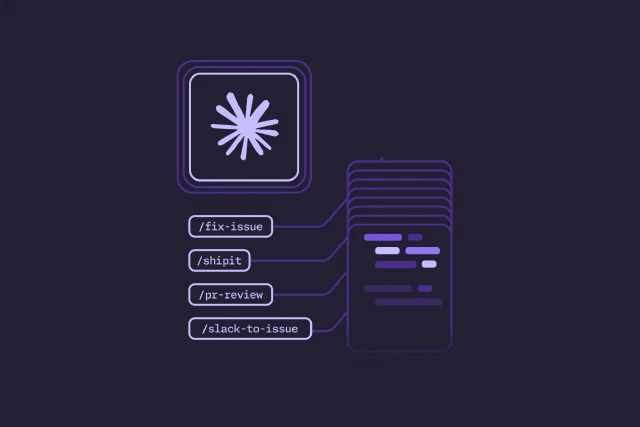
Treating Prompts Like Code: A Content Engineer's AI Workflow

Treating Prompts Like Code: A Content Engineer's AI Workflow

Pulumi has a lot of engineers. It has marketers, solution architects, developer advocates. Everyone has something to contribute to docs and blog posts — domain expertise, hard-won lessons, real-world examples. What they don’t all have is familiarity with our Hugo setup, our style guide, our metadata conventions, or where a new document is supposed to live in the navigation tree. I joined Pulumi in July 2025 as a Senior Technical Content Engineer. A few weeks in, my sole teammate departed. The docs practice was now, functionally, me.

The problem was clear enough: how do you take one docs engineer’s accumulated knowledge and make it available to everyone who needs it, without that engineer becoming a bottleneck?

I started packaging it. Here’s what that looked like in practice.

Read more →

How Ralph Wiggum Built a Serverless SaaS with Pulumi

I was about to do something that felt either genius or completely reckless: hand over my AWS credentials to an AI and step away from my computer. The technique is called “Ralph Wiggum,” named after the Simpsons character who eats glue and says “I’m in danger” while everything burns around him. And honestly, that felt about right for what I was attempting.

Read more →

AI Predictions for 2026: A DevOps Engineer's Guide

The IDE is dying, and so is tool calling. OpenAI is not going to win. And next year, you’re going to be shipping code that you’ve never reviewed before, even as an experienced engineer.

These are bold claims, but the way we use AI in 2026 for coding and agents is going to look completely different. In this post, I want to cover my predictions and why they matter right now for DevOps engineers. Some of these are definitely hot takes, but that’s what makes this conversation worth having.

Read more →

Day 2 Operations: Drift Detection and Remediation

Welcome to the fourth post in our IDP Best Practices series. Today we’re diving into the world of drift detection and remediation, those critical day 2 operations that keep your infrastructure aligned with its intended configuration long after the initial deployment.

You’ve built a beautiful platform with robust guardrails, comprehensive templates, and well-defined golden paths. Your developers are productive, deployments are smooth, and everything seems perfect. Then reality hits. An on-call engineer makes an emergency change through the AWS console during a 3 AM incident. A team member tweaks a security group rule to debug a connection issue and forgets to revert it. Auto-scaling adjusts capacity based on load patterns. Before you know it, your actual infrastructure has quietly diverged from what your code describes.

Read more →

I Tried Jenkins in 2025 with Pulumi: Here's How It Went

It’s funny how technology has a way of sneaking back into your life just when you think you’ve moved on for good. Jenkins and I have quite the history. Think of it as that reliable but slightly temperamental friend from your college days who you haven’t seen in years.

Read more →

The infrastructure as code platform for any cloud.