


Pulumi logo

Posts Tagged developer-experience

Treating Prompts Like Code: A Content Engineer's AI Workflow

Treating Prompts Like Code: A Content Engineer's AI Workflow

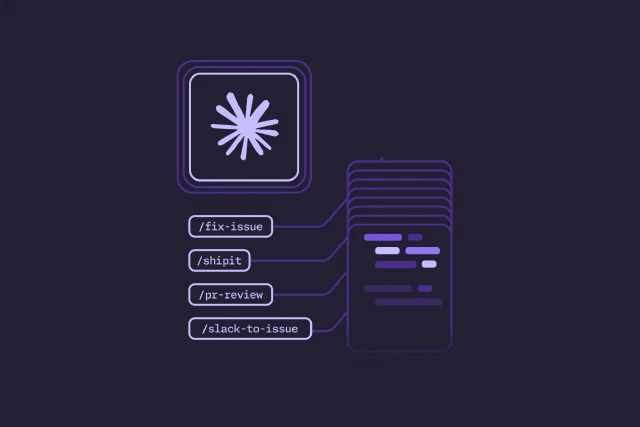
Pulumi has a lot of engineers. It has marketers, solution architects, developer advocates. Everyone has something to contribute to docs and blog posts — domain expertise, hard-won lessons, real-world examples. What they don’t all have is familiarity with our Hugo setup, our style guide, our metadata conventions, or where a new document is supposed to live in the navigation tree. I joined Pulumi in July 2025 as a Senior Technical Content Engineer. A few weeks in, my sole teammate departed. The docs practice was now, functionally, me.

The problem was clear enough: how do you take one docs engineer’s accumulated knowledge and make it available to everyone who needs it, without that engineer becoming a bottleneck?

I started packaging it. Here’s what that looked like in practice.

Read more →

Golden Paths in IDPs: A Complete Guide to Reusable Infrastructure with Pulumi Components and Templates

Welcome to the second post in our IDP Best Practices series. In this article, we explore how to create golden paths, pre-architected, reusable infrastructure patterns that help standardize and accelerate cloud development.

Modern cloud platforms offer endless options, over 200 AWS services, sprawling Azure catalogs, and countless DevOps tools. The result? Developers face decision fatigue and inconsistent implementations. Golden paths solve this by providing ready-to-use, production-grade infrastructure that encodes your organization’s best practices, security policies, and operational standards.

In this guide, you’ll learn how to build golden paths for your Internal Developer Platform using two core Pulumi constructs: Components, reusable infrastructure building blocks, and Templates, predefined, deployable patterns. You’ll see how to create infrastructure abstractions that are written once, shared across teams, and consumed in any language, turning weeks of setup into minutes of developer-ready infrastructure.

Read more →

How to Build an Internal Developer Platform: Strategy, Best Practices, and Self-Service Infrastructure

Welcome to the first post in our IDP Best Practices series. In this guide, we’ll walk through the strategic foundations for designing an Internal Developer Platform that empowers developers without sacrificing governance, security, or operational control.

At Pulumi, we’ve worked with hundreds of teams facing the same core challenge: How do you give developers the infrastructure access they need, while maintaining the governance and security your organization requires?

That tension is at the heart of every IDP conversation. Teams want to move faster and innovate, but also need to stay compliant, control costs, and maintain operational stability.

The good news? You can do both, with a clear strategy and the right approach. This series shares proven best practices for designing, building, and scaling IDPs using Pulumi.

Read more →

AI-Assisted Infrastructure as Code with Pulumi's Model Context Protocol Server

Note: This post discusses Pulumi Copilot, which Pulumi Neo has replaced. Learn about Neo →

Infrastructure as Code (IaC) has revolutionized how we manage cloud resources, but navigating complex cloud provider APIs, writing boilerplate code, and iterating through deployment cycles can still be time-consuming. Pulumi offers a fantastic developer experience using familiar programming languages. But what if we could make it even faster and more intuitive by integrating powerful AI assistants directly into the development loop?

Read more →

Your Perfect Infrastructure May Not Be So Perfect

Guest Article: Simen A. W. Olsen from Bjerk, is here to share his lessons learned on why designing the perfect architecture for your future needs might be a mistake

I remember standing in front of our engineering team in 2018, proudly presenting what I believed was the future-proof architectural design for our new distributed system. The diagrams were immaculate, the technology choices were cutting-edge, and the scalability patterns were ready for any possible future scenario.

I was basically the Leonardo da Vinci of system design… if Leonardo had been really into Kubernetes and had a concerning addiction to coffee. But six months later, that “future-proof” architecture had become a constraint rather than an enabler, and my masterpiece was looking more like a finger painting done by a caffeinated raccoon.

Read more →

Integrating DevOps and Security in Platform Engineering

Platform engineering has become essential for mid-to-large organizations, moving beyond a DevOps trend. Gartner predicts that by 2026, 80% of software companies will have internal platform services to streamline development. The goal is to empower developers with self-service tools while maintaining security, compliance, and reliability through DevSecOps practices.

At PulumiUP Europe 2024, experts shared insights on aligning DevOps with security to build scalable, secure platforms:

  • Jess Mink, Sr. Director of Platform Engineering at Honeycomb
  • Kief Morris, Global Head of Infrastructure Engineering at ThoughtWorks
  • Lindsay Jack, VP of Engineering & Security at Snyk
  • Nariman Aga-Tagiyev, Application Security Architect at WiseFrog Security
  • Komal Ali, Engineering Manager at Pulumi

The panel discussed key strategies, challenges, and pillars of successful platform engineering.

Read more →

DevSecOps Game-Changer: Security Automation That Delivers Business Results

Organizations are under constant pressure to deliver new products and features faster than ever. But speed alone isn’t enough—businesses must also navigate the complex challenges of ensuring security and managing infrastructure costs effectively.

Enter DevSecOps - the strategic integration of security practices into the DevOps workflow. By automating security processes, organizations can achieve improved speed, scalability, and business impact, all while ensuring security remains a priority.

Tivity Health, a leading health and fitness solutions provider, has embraced this DevSecOps approach using Pulumi, a modern infrastructure as code (IaC) platform. During PulumiUP 2024, David Giambruno, Tivity Health’s VP of Engineering and DevOps, shared how, by leveraging Pulumi, he led the transformation that continuously drives remarkable results in speed, cost savings, and security.

Read more →

Pulumi Patterns and Practices Platform (P3): Some Assembly Required

Note: This post discusses Pulumi Copilot, which Pulumi Neo has replaced. Learn about Neo →

Setting up an internal developer platform (IDP) can be a daunting task. There are a lot of tools out there that do some of the work for you, but none of them do all of it. Pulumi P3 is no different. Pulumi Patterns & Practices Platform (P3) is a reference architecture that we will be describing, and providing code for, through this series of articles.

Read more →

Unified and Programmatic Approach to Infrastructure Management at BMW Using Pulumi

In the ever-evolving world of automotive technology, BMW has been at the forefront of innovation, seamlessly integrating software into the heart of their vehicles. As cars become increasingly complex, with a growing emphasis on connectivity, over-the-air upgrades, and brand-specific user experiences, the need for a robust and scalable software development approach has become paramount.

Enter the BMW Software Factory, a platform that aims to empower the company’s developers and provide them with a superior development experience. At the core of this initiative is the adoption of Pulumi, a modern infrastructure as code (IaC) solution that has transformed the way BMW manages its software ecosystem.

Read more →

AWS CDK vs Pulumi: Why SST Chose Pulumi

Cloud computing tools evolve, and so must the frameworks developers rely on. For SST (Serverless Stack), AWS CDK was a great starting point—but it had limitations.

  • CDK tied infrastructure to AWS.
  • Debugging was frustrating due to CloudFormation templates.
  • Multi-cloud was nearly impossible.

The solution? Pulumi. In this post, we’ll explore why SST moved to Pulumi, what challenges they overcame, and what this means for developers building modern cloud applications.

TL;DR: Pulumi lets SST offer a faster, more flexible, and provider-agnostic infrastructure experience.

Read more →

The infrastructure as code platform for any cloud.