


Pulumi logo

Posts Tagged ai

Neo: Share Tasks for Collaborative AI Infrastructure Operations

Neo shows its work, but until now that context was only viewable by the user that initiated the conversation. When you wanted a teammate’s input on a decision Neo made, you had to describe it in Slack or screenshot fragments of the conversation. Today we’re introducing task sharing: share a read-only view of any Neo task with anyone in your organization, full context preserved.

Read more →

Pulumi Agent Skills: Best practices and more for AI coding assistants

AI coding assistants have transformed how developers write software, including infrastructure code. Tools like Claude Code, Cursor, and GitHub Copilot can generate code, explain complex systems, and automate tedious tasks. But when it comes to infrastructure, these tools often produce code that works but misses the mark on patterns that matter: proper secret handling, correct resource dependencies, idiomatic component structure, and the dozens of other details that separate working infrastructure from production-ready infrastructure.

Read more →

Deploy OpenClaw on AWS or Hetzner Securely with Pulumi and Tailscale

Update (January 2026): The lobster has molted into its final form! From Clawdbot to Moltbot to OpenClaw. With 100k+ GitHub stars and 2M visitors in a week, the project finally has a name that’ll stick. The CLI command is now openclaw and the new handle is @openclaw. Same mission: AI that actually does things. Your assistant. Your machine. Your rules. See the official getting started guide for updated installation instructions.
Update (April 2026): Refreshed for OpenClaw 2026.4.27. Upstream now recommends Node 24, but the cloud-init script in this post still installs Node 22 — both work. If you’d like Node 24, change the nvm install 22 lines to nvm install 24.

The short version: Deploy OpenClaw to AWS or Hetzner with a Pulumi TypeScript program that provisions the VM, installs Docker, Node, and OpenClaw, then joins the instance to your Tailscale network so the gateway and browser ports stay private. One pulumi up to deploy, one pulumi destroy to tear down. Total cost: about $33/month on AWS or $7/month on Hetzner.

OpenClaw is everywhere right now. The open-source AI assistant gained 9,000 GitHub stars in a single day, received public praise from former Tesla AI head Andrej Karpathy, and has sparked a global run on Mac Minis as developers scramble to give this “lobster assistant” a home. Users are calling it “Jarvis living in a hard drive” and “Claude with hands”—the personal AI assistant that Siri promised but never delivered.

Read more →

Neo: Zero-downtime migration from CDK, Terraform & Azure ARM

The barrier to migrating to Pulumi has always been the infrastructure you already have. Your existing resources can’t be disrupted, and manually importing them into a new tool is risky and time-consuming. Today, we’re excited to share how Neo removes this barrier entirely with automated, zero-downtime migration to Pulumi from AWS CDK, AWS CloudFormation, Terraform, CDKTF, and Azure ARM templates.

Read more →

How Ralph Wiggum Built a Serverless SaaS with Pulumi

I was about to do something that felt either genius or completely reckless: hand over my AWS credentials to an AI and step away from my computer. The technique is called “Ralph Wiggum,” named after the Simpsons character who eats glue and says “I’m in danger” while everything burns around him. And honestly, that felt about right for what I was attempting.

Read more →

From 'Works on My Machine' to Production-Ready: Building AI Agents with Amazon Bedrock AgentCore

Every developer building AI agents knows the gap between a working prototype and production deployment. Your fraud detection agent works perfectly on your laptop, but how do you deploy it with proper authentication, memory persistence, observability, and guardrails? This post walks through a complete journey from local development to production-ready AI agents using Amazon Bedrock AgentCore, the Strands SDK, and Pulumi.

Read more →

AI Predictions for 2026: A DevOps Engineer's Guide

The IDE is dying, and so is tool calling. OpenAI is not going to win. And next year, you’re going to be shipping code that you’ve never reviewed before, even as an experienced engineer.

These are bold claims, but the way we use AI in 2026 for coding and agents is going to look completely different. In this post, I want to cover my predictions and why they matter right now for DevOps engineers. Some of these are definitely hot takes, but that’s what makes this conversation worth having.

Read more →

Encode What You Know With Neo: Custom Instructions and Slash Commands

Every organization builds up knowledge over time: naming standards, compliance requirements, patterns your team has settled on, and proven approaches to common tasks. Until now, bringing this knowledge into Neo meant repeating it manually each time - specifying preferences, describing how your team works, and recreating prompts that someone already perfected.

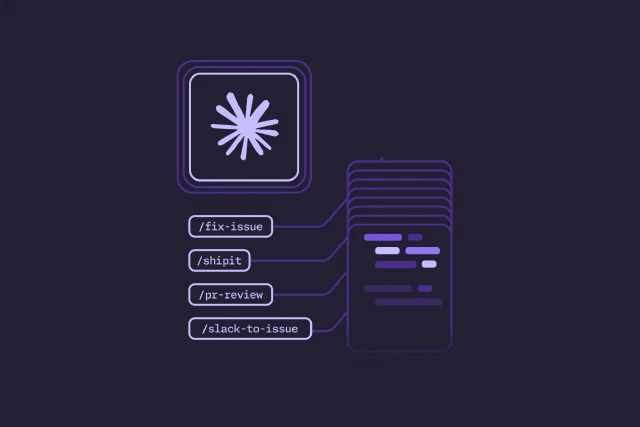
Two new features change this. Custom Instructions teach Neo your standards so it applies them automatically. Slash Commands capture proven prompts so anyone on your team can use them with a keystroke.

Read more →

Future of the Cloud: 10 Trends Shaping 2026 and Beyond

In 2026, several trends will dominate cloud computing, driving innovation, efficiency, and scalability. From Infrastructure as Code (IaC) to AI/ML, platform engineering to multi-cloud and hybrid strategies, and security practices, let’s explore the 10 biggest emerging trends.

Read more →

The infrastructure as code platform for any cloud.