Posts Tagged features

Pulumi IAM Expands: Manage Access at Scale with Tags, Roles, and Teams

Pulumi IAM Expands: Manage Access at Scale with Tags, Roles, and Teams

Since the launch of Pulumi IAM with custom roles and scoped access tokens, organizations have been using fine-grained permissions to secure their automation and CI/CD pipelines. As teams scale to hundreds or thousands of stacks, environments, and accounts, the next challenge is applying those permissions efficiently.

Today, we’re introducing three new capabilities to help you manage permissions more dynamically at scale: tag-based access control, team role assignments, and user role assignments.


Read more →

From Kubernetes Gatekeeper to Full-Stack Governance with OPA

From Kubernetes Gatekeeper to Full-Stack Governance with OPA

Pulumi’s OPA (Open Policy Agent) support is now stable. The v1.1.0 release of pulumi-policy-opa makes OPA/Rego a first-class policy language for Pulumi with full feature parity alongside the native TypeScript and Python policy SDKs. Write Rego policies that validate any resource Pulumi manages, across AWS, Azure, GCP, Kubernetes, and the rest of the provider ecosystem. If you already have Kubernetes Gatekeeper constraint templates, a new compatibility mode lets you drop those .rego files directly into a Pulumi policy pack and enforce them against your Kubernetes resources without modification.

Read more →

Lock Down Values in Pulumi ESC with fn::final

Lock Down Values in Pulumi ESC with fn::final

Pulumi ESC (Environments, Secrets, and Configuration) allows you to compose environments by importing configuration and secrets from other environments, but this also means a child environment can silently override a value set by a parent. When that value is a security policy or a compliance setting, an accidental override can cause real problems. With the new fn::final built-in function, you can mark values as final, preventing child environments from overriding them. If a child environment tries to override a final value, ESC raises a warning and preserves the original value.

Read more →

New: Previous Provider Version Docs in Pulumi Registry

New: Previous Provider Version Docs in Pulumi Registry

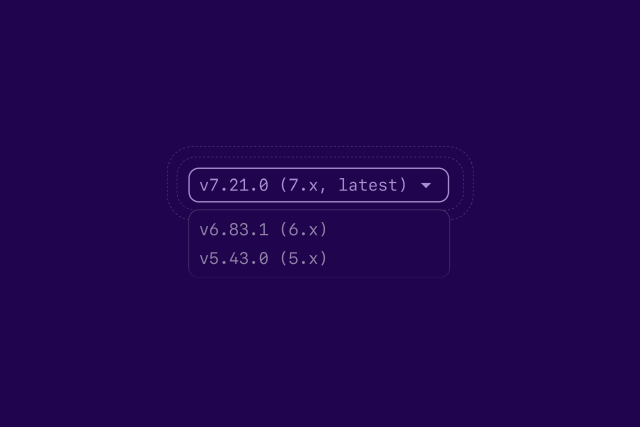
The Pulumi Registry now supports browsing documentation for previous versions of first-party Pulumi providers. If you’ve ever needed to look up the API docs for an older provider version, you no longer have to dig through Git history or guess at changes — the docs are right there in the Registry. These docs also help Pulumi Neo and other agents more accurately assist you with your Pulumi code and operations.

Read more →

Pulumi Cloud Now Supports Google Sign-In

Pulumi Cloud Now Supports Google Sign-In

Many developers and platform engineers already use Google accounts daily for email, cloud console access, and collaboration. Until now, signing in to Pulumi Cloud required a GitHub, GitLab, or Atlassian account, or an email/password combination. Today, we’re adding Google as a first-class identity provider, so you can sign in to Pulumi Cloud with the same Google account you already use for everything else.

Read more →

Now in Public Preview: Store Terraform State in Pulumi Cloud

Now in Public Preview: Store Terraform State in Pulumi Cloud

Platform engineering teams managing infrastructure across Terraform and Pulumi now have a way to unify state management without rewriting a single line of HCL. Starting today, Pulumi Cloud can serve as a Terraform state backend, letting you store and manage Terraform state alongside your Pulumi stacks. Your team continues using the Terraform or OpenTofu CLI for day-to-day operations while gaining the benefits of Pulumi Cloud: AI-powered infrastructure management with Pulumi Neo — our infrastructure agent — encrypted state storage, update history, state locking, role-based access control, audit policies, and unified resource visibility through Insights.

Read more →

Now GA: Up to 20x Faster Pulumi Operations for Everyone

Now GA: Up to 20x Faster Pulumi Operations for Everyone

In January, we introduced a major performance enhancement for Pulumi Cloud through a fundamental change to how Pulumi manages state that speeds up operations by up to 20x. After a staged rollout across many organizations, it is now enabled by default for every Pulumi Cloud operation. No opt-in required—just use Pulumi CLI v3.225.0+ with Pulumi Cloud. The improvement applies to pulumi up, pulumi destroy, and pulumi refresh; pulumi preview does not modify state, so it is unchanged.

Read more →

Run Pulumi Insights on Your Own Infrastructure

Run Pulumi Insights on Your Own Infrastructure

Pulumi Insights gives you visibility and governance across your entire cloud footprint: discovery scans catalog every resource in your cloud accounts, and policy evaluations continuously enforce compliance against those resources. Until now, Insights workflows ran exclusively on Pulumi-hosted infrastructure. That works well for many teams, but enterprises with strict data residency requirements, private network constraints, or regulatory obligations need to run this work in their own environments. Today, Pulumi Insights supports customer-managed workflow runners for both SaaS Pulumi Cloud and self-hosted Pulumi Cloud installations.

Read more →

How We Built a Distributed Work Scheduling System for Pulumi Cloud

How We Built a Distributed Work Scheduling System for Pulumi Cloud

Pulumi Cloud orchestrates a growing number of workflow types: Deployments, Insights discovery scans, and policy evaluations. Some of that work runs on Pulumi’s infrastructure, and some of it runs on yours via customer-managed workflow runners. We needed a scheduling system that could handle all of these workflow types reliably across both environments. In this post, we’ll take a look at the system we built.

Read more →