


Pulumi logo
Guinevere Saenger

Guinevere Saenger

Software Engineer

Introducing envVarMappings for Provider Credentials

Introducing envVarMappings for Provider Credentials

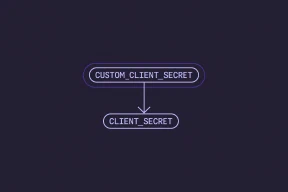
Running multiple providers with different credentials in the same Pulumi program has always been tricky. Providers expect fixed environment variable names like AWS_ACCESS_KEY_ID or ARM_CLIENT_SECRET, so if you need two AWS providers targeting different accounts, you couldn’t configure them both via environment variables.

Pulumi v3.220.0 introduces envVarMappings, a new resource option that solves this problem by letting you remap provider environment variables to custom keys.

Read more →

Pulumi Google Cloud Provider Version 9.0.0

We’re excited to announce the v9 release of the Pulumi Google Cloud Provider! This major release contains important updates to Google Cloud resources and functions, and keeps you up to date with what’s new from Pulumi.

The Pulumi Google Cloud provider can be used to provision any of the Google Cloud resources available in the upstream provider. The provider is open source and available on GitHub so you can be part of the community - issues and pull requests are always welcome!

Read more →

Pulumi Google Cloud Provider Version 8.0.0

The latest major release of the Pulumi Google Cloud Provider is available now! Our 8.0 release contains the latest upstream changes to keep you up-to-date along with the latest features and improvements from Pulumi.

The Pulumi Google Cloud provider can be used to provision any of the Google Cloud resources available in the upstream provider. The provider is open source and available on GitHub so you can always follow along with current issues and developments, or even open your first pull request.

Read more →

Fast Docker Image Builds with Pulumi

How do I speed up Docker image builds with Pulumi? Use BuildKit (the default since Docker 23), enable a registry or layer cache so repeated builds reuse work, write a multi-stage Dockerfile so production images skip build-time dependencies, and reach for the dedicated Docker Build provider when you need buildx features like multi-platform images, build secrets, or Docker Build Cloud. With these techniques together, repeat builds in a Pulumi program commonly drop from minutes to seconds.

Read more →

Multicloud with Kubernetes and Pulumi

In this article we’ll show you how to use Pulumi Components and the Pulumi Automation API to make golden path decisions which will both support your customers on multiple different clouds, and enable infrastructure teams and frontend service teams to more easily own their respective parts of your codebase.

Read more →

How we manage GitHub at Pulumi with Pulumi

We recently updated this article to reflect that parentTeamId of the Team resource accepts a string instead of an int since v5.9.1 of the Pulumi Github package.

Ah, GitHub. The home of all developers. The place where we share code. The world’s most awkward social media site. The secret LinkedIn for techies. The tool we use for company org structure, work planning, code ownership, and permissions…

Wait.

That’s quite a lot.

GitHub is good at many things, but a full-on organization management tool it is not.

Have you ever needed your manager to manually enable admin permission on a repo for you? Or have you needed to page the CEO to add you to a team, because your manager was out that day? Have you ever wondered who is on what team? Or which team owns a repo? What if you change teams, or a team changes names? A reorg happens, and the “platform-integrations” team is no more, but we still need to call it that on GitHub because it is the team with all the repository accesses?

When I joined Pulumi in 2021, all of the above happened to me within my first few weeks.

We at Pulumi wanted to reduce this kind of management friction, and we decided to solve it the Pulumi way: with declarative infrastructure using the Pulumi GitHub provider.

Read more →

The infrastructure as code platform for any cloud.